

Which is better for your health: glass or plastic food containers?
When it comes to storing and transporting our food, the question always arises: which is better, a glass or a plastic container? Although plastic food containers were the most common for years, more and more people are opting for glass containers due to their many advantages in terms of health, hygiene, and durability.
In this article, we will analyze why glass food containers have become the best option for everyday use, especially if you are concerned about the quality of your food and the safety of the containers where you store your meals.
Which is better for health?
When we talk about food preservation, health comes first. And here glass has the advantage:
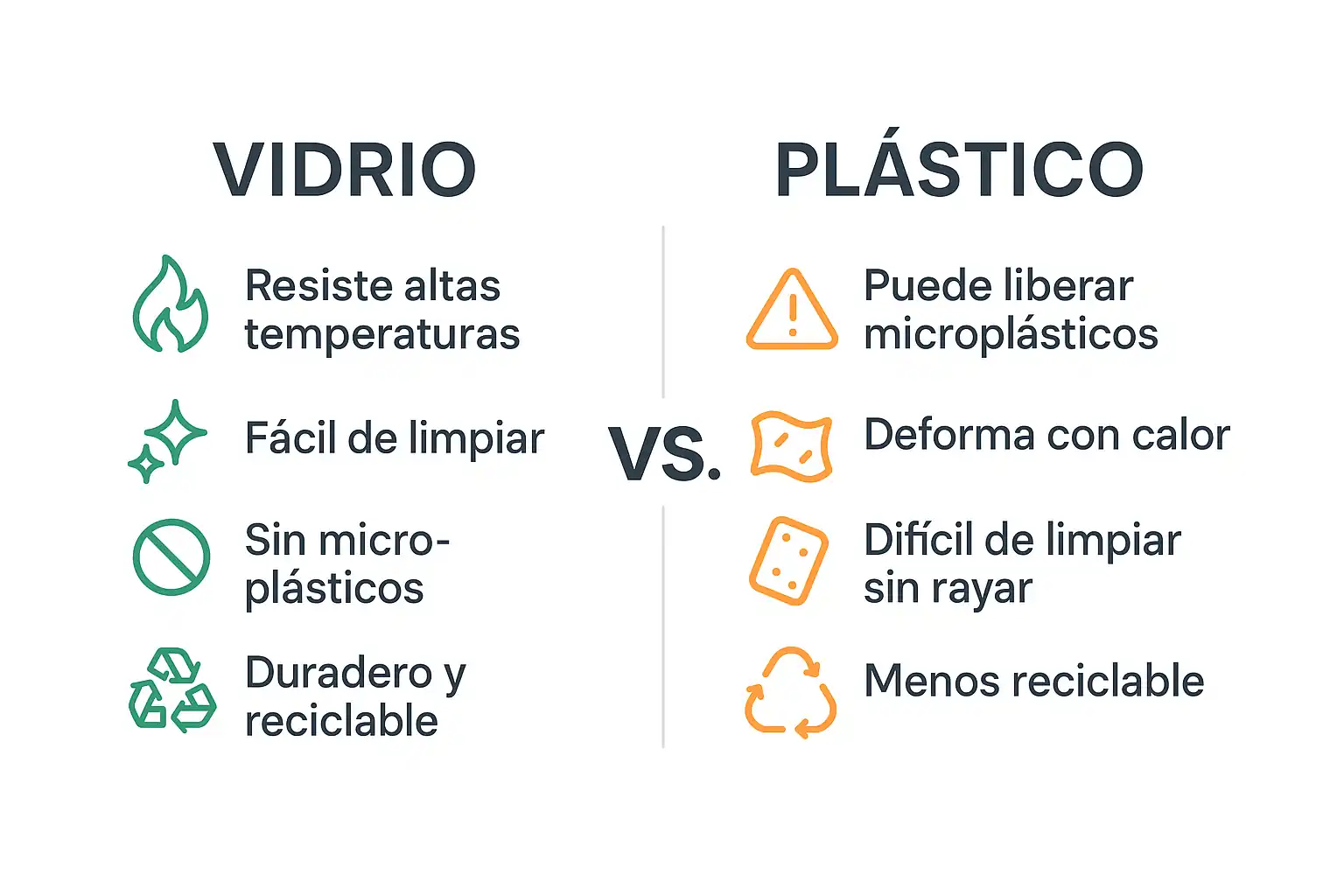
- Glass is inert: it does not react with food, even when it is hot, acidic, or greasy.
- Plastic can release microplastics and chemical substances (such as bisphenol A in some types of plastic) that end up in food.
- With frequent use, plastic scratches or degrades, which increases the risk of particle transfer.
Therefore, if your priority is health, the answer is clear: glass containers are the best option.
Which are healthier for heating meals?
One of the most frequent questions is: which are safer for the microwave, glass or plastic containers?
- Glass perfectly withstands high temperatures, without altering its composition or affecting food.
- Plastic, on the other hand, can release microplastics when heated in the microwave or washed with very hot water.
So, if you usually reheat your dishes directly in the container, glass food containers are undoubtedly safer.
Ease of cleaning: an advantage of glass
Another key point is hygiene.
- Glass containers do not retain odors or stains. You can store tomato sauce or curry without worrying about the container being stained.
- Plastic containers scratch easily when rubbed with scouring pads or abrasive products, which favors the accumulation of bacteria and makes cleaning difficult.
- In addition, glass perfectly withstands the dishwasher and very hot water, something that quickly wears out plastic.
This makes glass a much more practical and durable option.
Durability and sustainability
Beyond health and hygiene, it is also worth considering durability:
- Glass containers can last for years if properly cared for.
- Plastic tends to deteriorate quickly, losing transparency and resistance.
- In addition, glass is 100% recyclable, making it more environmentally friendly.
Investing in a set of glass food containers is betting on sustainability and long-term savings.
Conclusion
So, which is better, a glass or a plastic container?
The answer is clear: glass containers offer more safety for your health, are more hygienic, easy to clean, durable, and sustainable.
If you want to take care of what you eat and reduce the risk of ingesting microplastics, always choose glass food containers.
❓ Which is better, a glass or a plastic container?
Glass containers are healthier and easier to clean than plastic ones. These are the main differences:
- Health: glass is inert and does not release microplastics; plastic can release substances when heated or scratched.
- Heat: glass food containers are safe in the microwave and oven; plastic ones deteriorate and can contaminate food.
- Hygiene: glass does not retain odors or stains; plastic scratches and accumulates bacteria.
- Durability: glass lasts for years and is recyclable; plastic degrades quickly.
👉 In summary: glass containers are the healthiest and safest option for storing and heating meals.