Quick summary
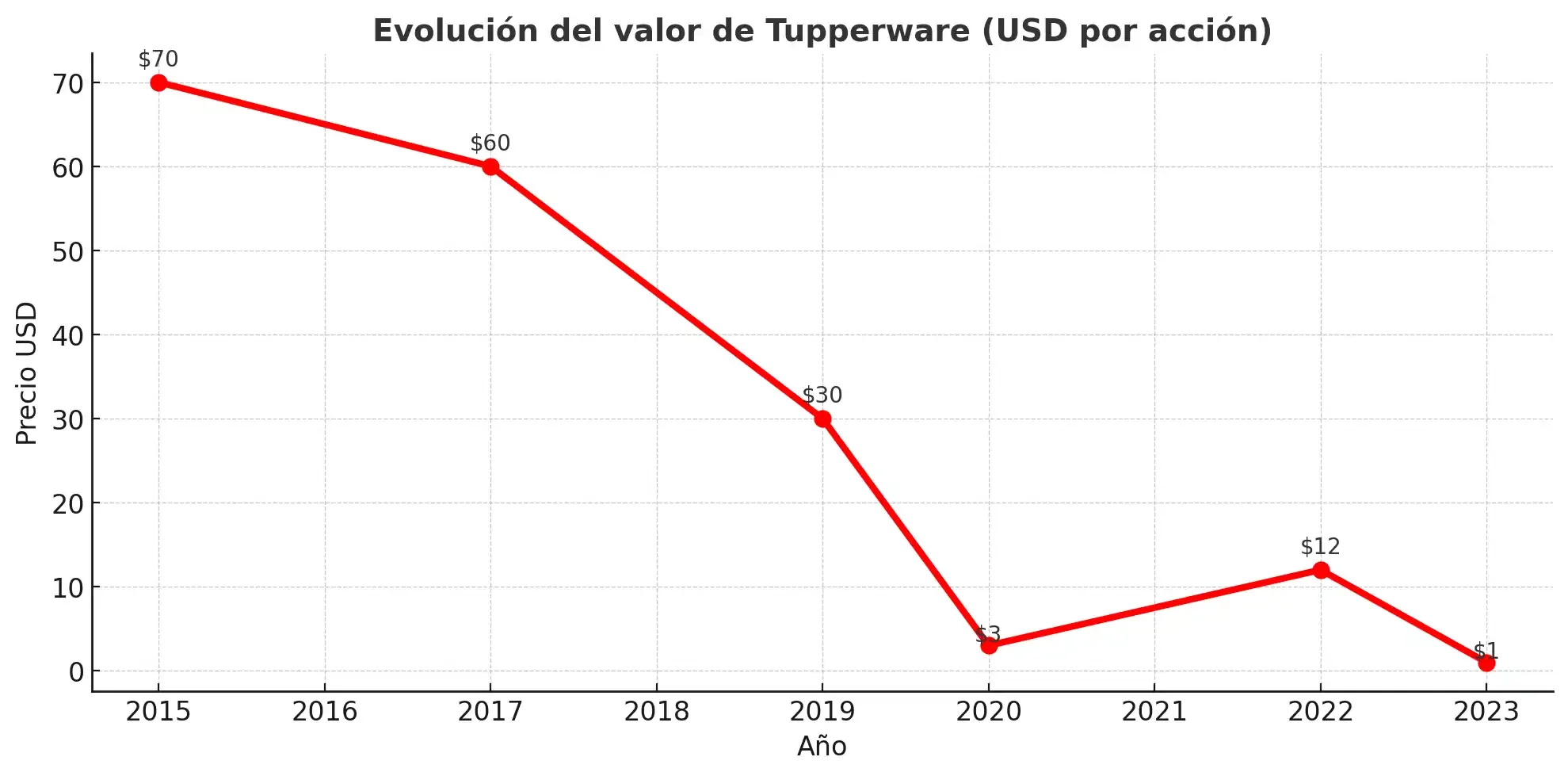
Tupperware faced a liquidity crisis that led to Chapter 11 bankruptcy on September 17, 2024, a delisting from the NYSE, and the sale of the business to a group of lenders. The company continues to operate under new private ownership as “The New Tupperware Company”, with a focus on key markets and a product offering that in 2025 includes glass containers to move away from traditional plastic.
Timeline: from insolvency warnings to the "new" Tupperware
-
March–April 2024: The company warns it may not be able to continue operating due to lack of liquidity and that it depended on a complex debt restructuring.
-
September 17, 2024: Tupperware files for Chapter 11 in Delaware court to reorganize liabilities and maintain operations.
-
September 18, 2024: The NYSE begins delisting process due to the bankruptcy situation.
-
October 2024: The court approves the sale to lenders (Stonehill, Alden, among others) for $23.5M in cash + ~$63M in debt relief; the company becomes privately owned as The New Tupperware Company.
-
2024–January 2025: Closure of the last U.S. plant (Hemingway, South Carolina) and relocation of manufacturing to Lerma (Mexico); 148 layoffs, a measure linked to the simplification of the supply chain.
-
Late 2024–2025: The plan envisages continuing to operate in core markets (U.S., Canada, Mexico, Brazil, China, Korea, India, Malaysia) with gradual expansion to Europe/Asia under the new structure.
-
September 2025: The brand boosts its repositioning by launching “Voilá” glass container line (borosilicate, BPA-free lid with valve).
Causes of the crisis: why Tupperware lost oxygen
1) Declining direct sales model
The reliance on “Tupperware parties” and consultant networks lost traction against e-commerce and digital shopping habits, making it difficult to recruit and retain saleswomen.
2) Competition and price pressure
Retail brands and “white label” brands flooded the market with cheaper alternatives, eroding share and margins. (Context of competition and changing consumer behavior).
3) Cost clash and post-pandemic inflation
After a brief rebound due to the surge in home cooking, raw materials, labor, and freight costs rose, deteriorating profitability.
4) Financial fragility and accounting delays
Indebtedness increased, there were internal control weaknesses and reporting delays, which tightened access to financing and fueled the risk of continuity.
5) Sustainability and plastic perception
Environmental sensitivity pushed part of the public towards glass and steel, making traditional plastic less attractive; hence the recent shift to a glass range.
Measures the company is taking:
- Judicial restructuring and change of ownership
- Industrial simplification and cost savings
-
Closure of Hemingway (U.S.) and consolidation in Mexico to gain scale and reduce logistical costs.
- Focus on core markets and omnichannel
- Continuity in U.S., Canada, Mexico, Brazil, China, Korea, India, Malaysia; channels: consultants, e-commerce and retail partners.
- Product renovation
-
Launch of “Voilá” glass (oven/microwave, steam valve) to reposition the brand and respond to demand for more durable and “non-plastic” materials.
What does this mean for consumers and the sales force?
-
The brand is not disappearing: it remains active under new ownership, with continuous operations in priority markets.
-
Possible assortment improvement (glass) and service by optimizing factories and logistics, although with less industrial presence in the U.S. due to the Hemingway closure.
Lessons for businesses
-
Don't fall in love with the channel: if the customer migrates to digital, the model must move with them.
-
Flexible cost structure: consolidate plants and supply chains before debt chokes you.
-
Consumer-guided innovation: the shift to glass is a sign of actively listening to health and sustainability trends.
Frequently Asked Questions (FAQ)
Key Sources
-
Reuters: Chapter 11 announcement and sale to lenders. Reuters+1
-
NYSE/BusinessWire: Delisting proceedings. ir.theice.com+1
-
AP News: Judicial approval of sale and plan to exit bankruptcy under new ownership. AP News
-
Manufacturing Dive & Modern Retail: Closure of Hemingway (USA) and relocation to Mexico. manufacturingdive.com+1
-
PlasticsToday: "core" markets and multi-channel approach of the new company. Plastics Today
-
Food & Wine: new Voilá glass line (Sept. 2025). Food & Wine